
Evaluating weather conditions is one of the most critical skills for any radio-control pilot. Wind is a primary factor that directly influences flight stability, control responsiveness, and landing safety. This article analyzes how wind speed and direction affect different models, highlights the mechanical differences between steady breezes and turbulent gusts, and provides practical advice to help you decide when it is safe to take off and when you should remain on the ground.
How Much Wind Is Too Much For An RC Plane?
There is no single universal wind speed limit that applies to every radio-controlled model. A breeze that easily grounds a lightweight park flyer might be perfectly safe for a heavy, scale gas-powered model. Determining when the wind is too high requires assessing your aircraft's design, weight, and internal power system.
A widely accepted safety metric in the hobby is the 20% rule. This guideline states that your rc plane should not be flown in winds that exceed 20% of its maximum cruising speed. For example, if your model has a top speed of 30 mph, you should avoid flying when ground wind speeds exceed 6 mph. Pushing past this threshold can leave your aircraft unable to fly upwind, causing it to be carried away by the air current.
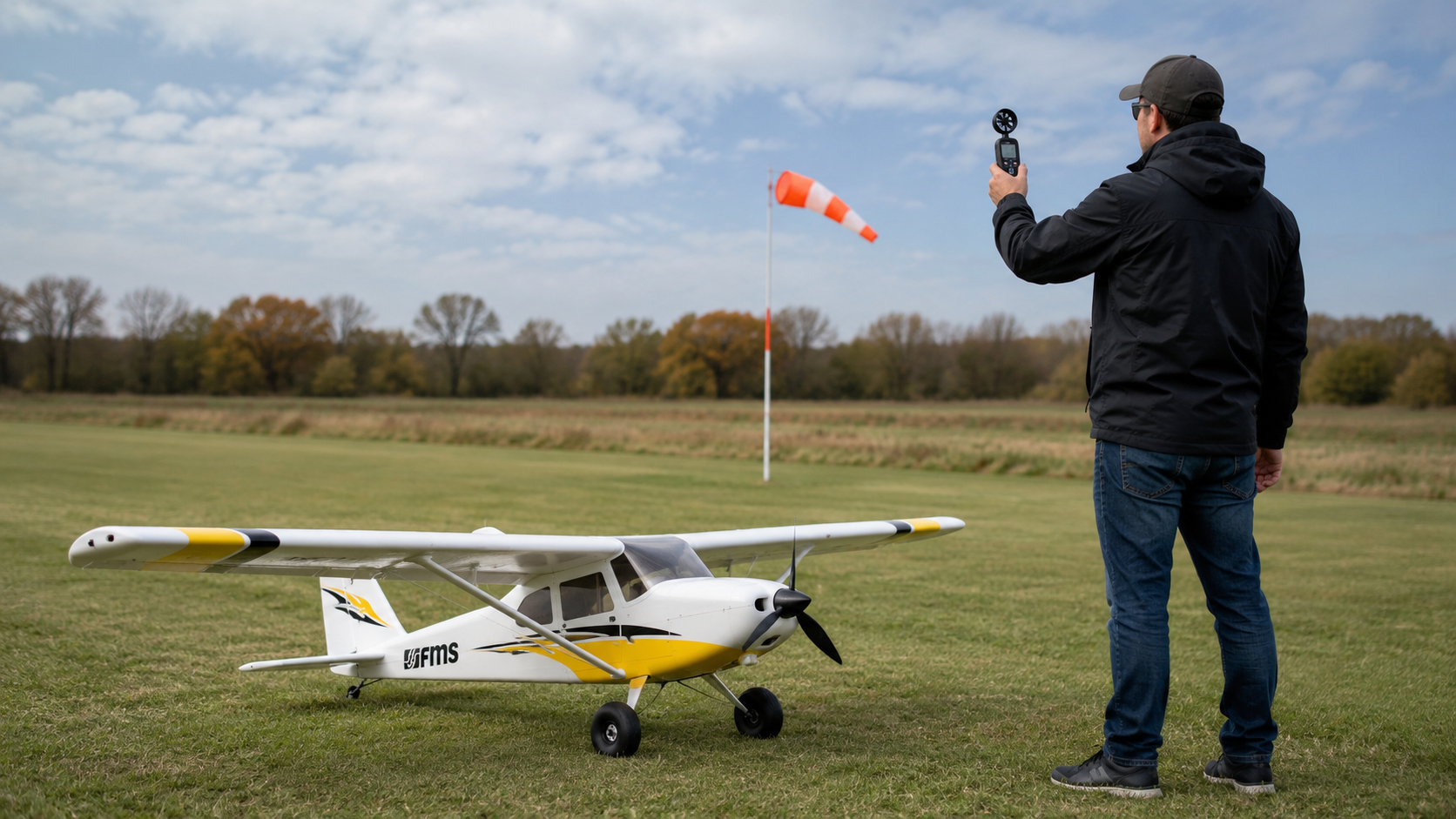
Ground wind speed can be highly deceptive, especially if your flying field is surrounded by trees or buildings that block the breeze. Before launching your remote control plane, utilize a handheld digital anemometer to measure the actual wind speed at eye level. Check the weather forecast for regional gusts, and remember that wind speeds are typically much higher at an altitude of 50 feet than they are on the ground.
Why Do Gusts Matter More Than Steady Wind?
While flying in a continuous, smooth breeze is relatively straightforward, gusty conditions present a completely different set of aerodynamic challenges. Sudden changes in wind speed and direction can instantly destabilize your model, requiring rapid, precise control adjustments.
Mechanical Turbulence Near Obstructions
When a steady wind hits physical obstacles like trees, fences, or spectator benches, the air is disrupted and becomes turbulent. This mechanical turbulence creates invisible pockets of rising, falling, and rolling air. If you pilot your rc aircraft through these micro-currents, the sudden shifts in wind speed can roll the wings unexpectedly, leaving you with very little time to correct.
Loss of Lift and Stalls
An aircraft relies on relative airspeed over its wings to generate lift. In a steady wind, the airspeed remains constant. However, if a sudden gust drops the wind speed rapidly, your plane’s relative airspeed also drops. If this reduction is significant, the wings can experience a sudden aerodynamic stall, causing the rc aircraft to drop. This risk is particularly high during final landing approaches when your plane is already flying slowly.
What Types Of RC Planes Handle Wind Better?
The physical traits of your model dictate how well it penetrates the air and resists being pushed off course. Lightweight trainers and scale biplanes are inherently more vulnerable to wind than streamlined, heavy aircraft.
Weight and Wing Loading
Wing loading refers to the relationship between the model’s total weight and its wing surface area. High wing loading means the model is relatively heavy for its size. In the world of radio controlled airplanes, models with high wing loading cut through turbulent air much more effectively than light, floaty designs. A heavier plane possesses more physical momentum, which helps it resist being displaced by sudden gusts.
Aerodynamic Profiles and Power
Low-wing sport models, jets, and gliders with thin, streamlined airfoils present less drag to the wind. These sleek designs allow the rc aircraft to maintain high speeds and penetrate headwinds efficiently. Additionally, planes equipped with brushless electric motors and high-voltage battery packs possess the power-to-weight ratio needed to fight strong headwinds and recover quickly from sudden drops in altitude.
How Does Wind Direction Affect Takeoff And Landing?
Wind is not just a hazard; it can also be a helpful tool if you understand how to utilize its direction. Aligning your flight path correctly with the wind is essential for maintaining control during the most critical phases of flight.
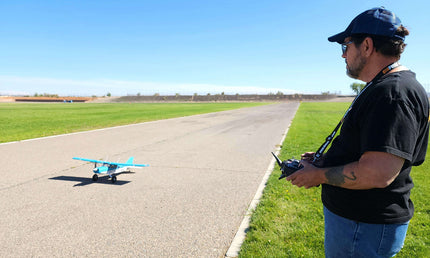
The absolute golden rule of aviation is to take off and land directly into the wind (a headwind). A headwind artificially increases the airspeed over your wings before the plane even begins to roll. This extra lift allows your plane to take off in a shorter distance and climb out at a steeper angle. During landing, a headwind slows your ground speed while maintaining high airspeed, allowing you to land gently in a tight space.
Landing with a tailwind is highly dangerous. It forces you to land at a much higher ground speed to maintain lift, increasing the risk of overshooting the runway. Similarly, crosswinds push the plane sideways, requiring pilots of radio controlled airplanes to use advanced techniques like crab angles or sideslips to keep the model aligned with the runway centerline.
What Should Beginners Check Before Flying In Wind?
Safe flight preparation requires a systematic assessment of your equipment and environment. If you are a novice pilot, taking the time to verify these details before launching can prevent a costly crash on your first day at the field.
Evaluating Your Skill Level
Before attempting to fly in any breeze, you must be honest about your piloting capability. During beginner rc flying practice, your brain is busy processing basic controls and orientation. If you add the stress of correcting for wind drift, it is very easy to become overwhelmed. If you cannot comfortably fly figure-eight patterns without thinking, you should only fly on days with dead-calm wind conditions.
Selecting the Right Model
Not all training models are built for wind. High-wing foam trainers are excellent rc airplanes for beginners because they are stable and slow-flying, but their low weight makes them highly sensitive to light breezes. If you want to practice in wind, ensure your trainer has some weight to it, or consider practicing on a high-fidelity RC flight simulator first to build muscle memory without risking your physical model.
Assessing the Flying Site and Airspace
Choose a wide, flat flying field completely free of nearby obstructions like tall trees, buildings, or power lines. When practicing beginner rc flying in a breeze, the wind will naturally push your model downwind. If your field is too small, your model can quickly drift over spectator areas. Always plan your flight path so that you fly your rc airplanes for beginners upwind of your standing position, keeping the model close enough to see clearly.
How Can You Fly More Safely In Light Wind?
If you decide to fly in a light, manageable breeze, you must adapt your piloting style to accommodate the moving air mass. By utilizing technology and maintaining safe margins, you can minimize risks and improve your flying skills.
Utilizing Electronic Stabilization Systems
Many modern rc aircraft are equipped with 3-axis gyro stabilization systems. These onboard gyros detect tiny uncommanded movements caused by wind gusts and instantly make sub-millisecond control corrections to stabilize the wings. While these systems do not make your rc plane immune to wind, they artificially smooth out the flight characteristics, making the plane feel much larger and heavier than it is.
Maintaining Adequate Altitude and Speed
When flying in a breeze, always fly higher than you would on a calm day. This extra altitude provides a critical safety buffer, giving you time to recover if a sudden gust pitches your remote control plane toward the ground. Additionally, keep your throttle setting slightly higher than usual to ensure you maintain adequate penetration speed when turning into a headwind, avoiding a dangerous downwind stall.
When Should You Not Fly?
Part of becoming a responsible pilot is knowing when to keep your model packed in the car. Recognizing these hard limits is the only way to protect your equipment and ensure the safety of spectators at the flying field.
Extreme Ground Wind and Gust Ratios
If the steady wind speed exceeds the capabilities of your trainer, do not fly. A key warning sign is when the gust speed is more than double the steady wind speed (for example, a 5 mph wind gusting to 15 mph). This volatile ratio makes rc airplanes for beginners highly unstable. If you notice that your model is standing still or flying backward relative to the ground when pointed into the wind, land immediately, as your radio controlled airplanes are underpowered for the conditions.
Obstacles, Low Visibility, and Unstable Weather
Never fly if the wind is blowing directly toward spectator areas, parking lots, or busy roads. If a gust causes you to lose control of your remote control plane, the model could injure someone or cause property damage. Additionally, avoid flying in high winds during late afternoon when visibility is low, or if there is any threat of rain, lightning, or incoming storm fronts, as these conditions are highly unpredictable for beginner rc flying and can quickly ruin your rc plane.
Conclusion
Understanding wind limits is essential for safe and successful RC aviation. While heavy, high-performance models can cut through moderate breezes, lightweight trainers are best kept on the ground when winds exceed a light breeze. By utilizing headwinds for takeoffs, flying at safe altitudes, and recognizing your personal piloting limits, you can protect your aircraft. When in doubt, always wait for a calmer day to enjoy your flying adventures safely.
FAQs
What Wind Speed Is Safe For Beginner RC Planes?
For absolute beginners flying lightweight foam trainers, ground wind speeds should ideally be under 5 mph (8 km/h). Calm morning air is the best time for training flights. Once you gain confidence and muscle memory, you can gradually practice in steady winds of up to 8 to 10 mph.
Can RC Planes Fly In 10 Mph Wind?
Yes, many intermediate and advanced RC planes can fly in 10 mph winds. However, this depends heavily on the model's weight and power. Lightweight micro-planes will struggle significantly, while heavier sport models, gliders, and gas-powered scale planes will handle 10 mph winds with ease.
Is Gusty Wind Dangerous For RC Aircraft?
Yes, gusty wind is far more dangerous than steady wind. Gusts cause rapid, unpredictable changes in lift and relative airspeed, which can roll your plane or cause sudden stalls near the ground. If the gust speeds are double the steady wind speeds, it is best to avoid flying.
Should You Take Off Into The Wind?
Absolutely. Taking off directly into the wind increases the relative airspeed over your wings, allowing your plane to generate lift quickly and take off in a shorter distance. Landing into the wind is also essential because it slows your ground speed, resulting in a gentler landing.
Are Bigger RC Planes Better In Wind?
Generally, yes. Larger RC planes are heavier and have higher wing loading, which gives them more physical momentum. This momentum helps them resist being pushed off course by sudden wind gusts, making them much more stable in windy conditions than small park flyers.