

Operating high-performance RC vehicles during the peak of summer presents unique mechanical challenges. Intense daytime heat can quickly push electronic speed controllers and lithium-polymer batteries past their thermal limits, leading to premature failures. Transitioning to night driving at local parking lots offers a practical, cooler alternative. This guide analyzes summer thermal issues, outlines how to select safe locations, and provides technical setup tips to ensure your evening bashing sessions are safe and productive.
Why Do RC Cars Struggle In Summer Heat?
Summer weather can be incredibly harsh on high-performance remote control gear. Unlike full-sized passenger vehicles that have large liquid-cooled radiators, RC models rely almost entirely on passive airflow to dissipate heat. When ambient temperatures rise, this passive cooling becomes significantly less effective.
Motor and ESC Overheating
Modern brushless motors and Electronic Speed Controllers (ESCs) generate substantial heat during rapid acceleration. In the summer, the hot air can cause the internal temperature of electric remote control cars to climb past 80°C (176°F) within minutes. If your ESC lacks thermal shutdown protection, these extreme temperatures can permanently damage the internal silicon chips, resulting in total electronic failure.
Battery Thermal Stress
Lithium-Polymer (LiPo) batteries naturally warm up during discharge due to internal chemical resistance. On a hot summer afternoon, this internal heating is compounded by high ambient air temperatures. Excessive heat can cause LiPo batteries to swell or puff, which permanently damages the cells and reduces their runtime. In extreme cases, charging or running a hot battery can lead to thermal runaway, posing a safety risk.
Is Night Bashing Better Than Daytime Driving?
Shifting your driving schedule to the evening hours completely changes your operating environment. By avoiding the intense mid-day sun, you protect your equipment while unlocking new ways to enjoy your RC hobby.
Once the sun sets, asphalt temperatures drop rapidly, and the ambient air cools down. This cooler air allows your remote control cars to dissipate heat much more efficiently, letting you run back-to-back battery packs without having to wait long intervals for your motor to cool down. Cooler operating temperatures preserve your electronics and ensure your power systems run at peak performance.
During the day, public parks and school grounds are often crowded with pedestrians, children, and pets. Driving fast remote control cars in crowded spaces is highly dangerous and can result in collisions. At night, commercial business parks and school parking lots are completely empty, giving you massive, unobstructed blacktop surfaces to test high-speed runs and practice controlled drifts safely.
How Do You Choose A Safe Parking Lot For RC Night Meets?
Organizing a night meet requires careful location scouting. Not every empty parking lot is suitable, and selecting the wrong site can lead to broken parts or unwanted attention from local authorities.
Lighting and Visibility
Look for commercial parking lots that feature bright, active overhead streetlights. High-quality lighting is essential because it allows you to see the orientation of your car from a distance. If a parking lot is completely dark, you will struggle to judge distances, making it highly likely that you will collide with curbs or light poles.
Surface Quality and Debris
Inspect the blacktop surface before launching your hobby rc cars. Look for smooth, freshly paved asphalt that is free of potholes, loose gravel, and deep expansion joints. Loose rocks can get caught in your car's steering links, while deep cracks can chip your chassis or damage low-hanging splitters during high-speed runs.
Legal Permissions and Local Bylaws
Always respect private property signs and local municipal bylaws. Many commercial properties utilize private security firms that will ask you to leave if they deem your activities hazardous. When organizing meets for remote control vehicles for adults, look for locations where RC driving is permitted, or choose public municipal lots where security is not an issue.
What Gear Do You Need For Night RC Driving?
Driving in low-light conditions requires specialized equipment to maintain safety and visual tracking. Adding a few key accessories to your pit bag ensures you can perform quick repairs and monitor your cars easily.
LED Headlights and Taillights
To drive safely after dark, you must equip your hobby rc cars with high-brightness LED lighting. Standard setups include white LEDs in the front bumper to illuminate the path ahead, and red LEDs in the rear to help you track the car's orientation. Specialized light kits plug directly into your receiver's auxiliary port, drawing a tiny amount of power.
High-Visibility Markers and Safety Vests
Safety must remain your top priority during night meets. All drivers and spectators should wear high-visibility reflective safety vests to ensure they are visible to any vehicles entering the lot. Use orange plastic cones equipped with small LED glow-sticks to mark out your temporary racetrack boundaries. These safety practices are standard for remote control vehicles for adults to prevent accidents.
Portable Pit Lights and Charging Stations
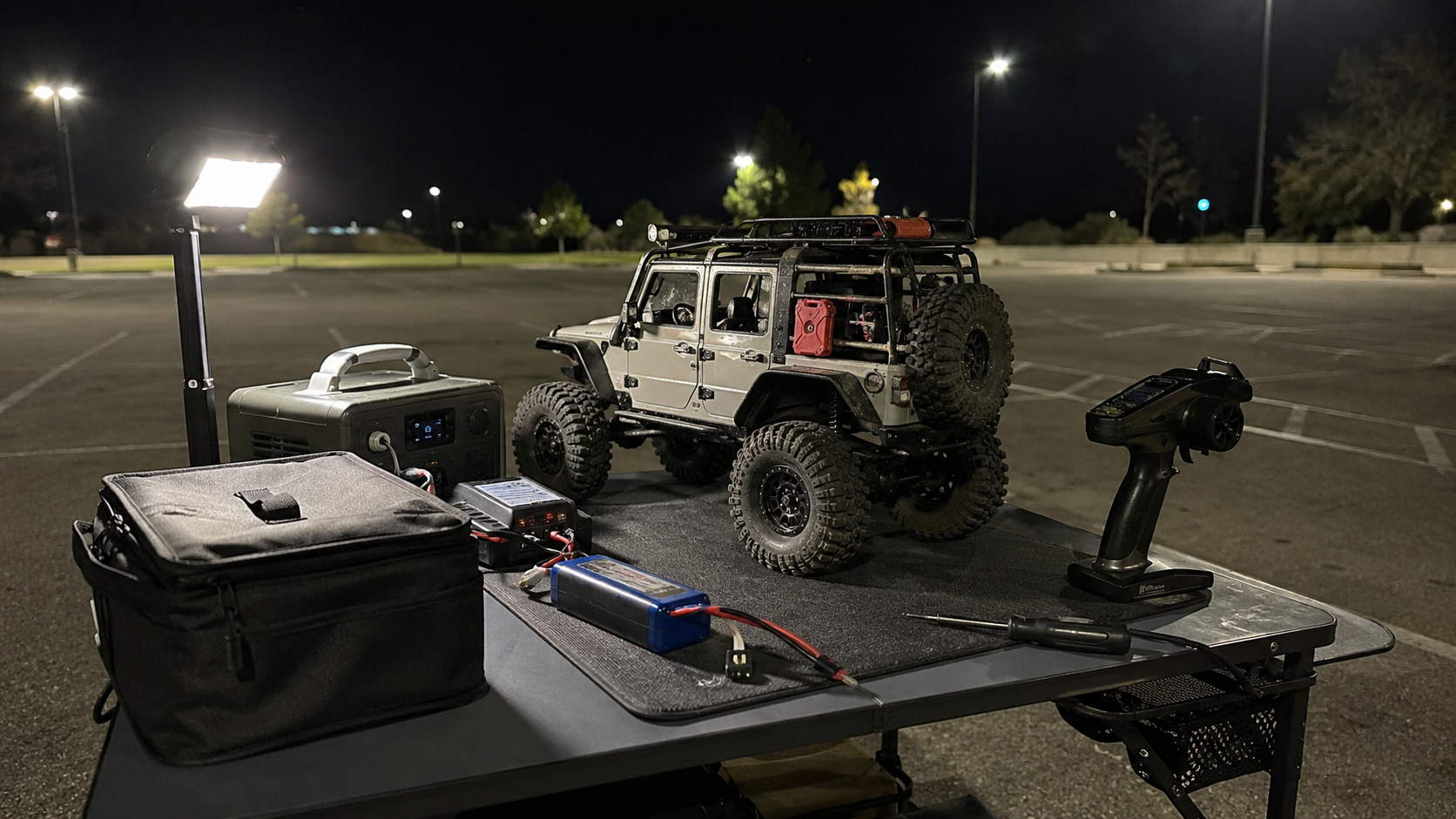
Performing roadside repairs in the dark is nearly impossible without adequate lighting. Bring a bright headlamp or a portable LED work light to illuminate your pit table. If you plan to charge batteries at the site, utilize a portable power station to run your balance chargers, keeping your electric remote control cars ready to drive throughout the night.
How Should You Set Up Your RC Car For Night Runs?
Preparing your chassis for night driving requires adjusting your electronics and mechanical settings to match the cooler temperatures and flat asphalt surfaces of a parking lot.
Because night air is cooler, you can safely experiment with slightly taller pinion gears to increase the top speed of your fast remote control cars without immediately overheating the motor. However, you should still utilize a digital temperature gun to monitor ESC and motor temperatures after your first run to ensure you are staying within safe operational limits.
Parking lot asphalt is often colder and less grippy than warm daytime tarmac. To maintain control, soften your suspension damping slightly to help the chassis absorb bumps, and switch to soft-compound rubber tires or dedicated drift tires. If you are converting an off road remote control car for street use, lower the ride height and install stiffer springs to prevent the chassis from rolling over.
What Safety Rules Should Every Night Meet Follow?
Well-organized meets rely on clear safety guidelines to protect drivers, spectators, and expensive equipment. Establishing these rules before the first battery is plugged in prevents costly collisions.
Designate a specific, elevated area (like a sidewalk or low retaining wall) as the driver's stand. All pilots must stand in this zone during operation. Establish a strict "no-drive" blast zone directly in front of the drivers to ensure that out-of-control remote control cars cannot collide with the pilots or spectators.
Because parking lots can echo, avoid running loud nitro-powered cars late at night near residential zones. Stick to whisper-quiet electric models, and ensure all drivers utilize different LED colors if several cars are on the track simultaneously. This visual separation makes it much easier to track your own vehicle, preventing high-speed tangles when driving fast remote control cars.
How Do You Protect Batteries And Electronics After A Hot Day?
Caring for your power systems after a long summer day is essential for extending their lifespan and preventing hazardous battery failures. Proper maintenance keeps your gear running reliably for years.
The Cool-Down Rule Before Recharging
Never plug a warm battery directly into your charger. Charging a battery that is still hot from a high-speed run can cause internal cell degradation. Always let your LiPo batteries rest in a shaded, ventilated area until they reach room temperature before starting the recharge cycle for your electric remote control cars.
Safe Storage and Transport
During hot summer months, never leave your batteries or cars in a parked vehicle, as interior temperatures can quickly exceed 60°C (140°F), which can warp plastic chassis parts. Store your LiPo batteries in certified fire-resistant bags, and transport your off road remote control car in a well-ventilated, climate-controlled cabin.
Post-Run Cleaning and Motor Maintenance
After an evening on the asphalt, your chassis will accumulate road dust, rubber debris, and tiny stones. Use a soft brush or compressed air to clean your suspension arms and drivetrain components. Regular maintenance is crucial for remote control vehicles for adults to ensure peak reliability. Inspect your remote control cars for any loose screws, check the gear mesh, and apply a drop of bearing oil to keep your hobby rc cars and off road remote control car running smoothly.
Conclusion
Transitioning to evening parking lot meets is an excellent way to escape summer heat while protecting your RC equipment. By selecting well-lit commercial lots, installing high-brightness LED lights, and maintaining safe driver stations, you can enjoy high-speed runs safely. Remember to protect your batteries from thermal stress and inspect your chassis regularly. Grab your gear, call your local club, and take over the asphalt tonight for an exciting, cool night-bashing session.
FAQs
Is It Safe To Drive RC Cars At Night?
Yes, driving RC cars at night is safe if you choose a well-lit parking lot free of pedestrian traffic and equip your vehicle with bright front and rear LED lights. Wearing reflective safety vests and establishing a designated driver's stand will also prevent accidents.
Can Heat Damage RC Car Batteries?
Yes, excessive heat is highly damaging to RC batteries. High temperatures can cause lithium-polymer (LiPo) batteries to puff, swell, and lose their capacity. Always let your batteries cool to room temperature before charging them, and never store them in a hot car.
What Lights Should I Add To An RC Car For Night Driving?
You should install a dedicated LED light kit that includes high-brightness white LEDs in the front bumper to illuminate your path, and red LEDs in the rear to help you track your car's orientation. Some kits also include colored underglow lights for added visibility.
Are Parking Lots Legal For RC Cars?
Generally, public municipal parking lots are legal to use as long as there are no posted signs prohibiting RC vehicles. For private commercial lots, always seek permission from the property owner or security team, and ensure you do not block active traffic.
Should I Drive Fast RC Cars At Night?
Yes, but only in highly illuminated areas where you have a clear, unobstructed line of sight. High speeds require extra stopping distance, so ensure the parking lot is completely free of curbs, light poles, and loose gravel before performing high-speed speed runs.