
Joining an RC flying club is the safest and most efficient way to learn aerial navigation. Local fields provide structured environments, paved runways, and experienced mentors ready to assist new pilots. This guide explains how to locate a facility, understand flight line etiquette, and select appropriate hardware. You will learn exactly what to expect on your first day and how to choose equipment that guarantees a successful introduction to the flying hobby of RC planes.
Find a Local AMA (Academy of Model Aeronautics) Field
Searching online for "RC planes near me" often brings up retail stores, but finding a dedicated flying field requires specific directories. In the United States, the Academy of Model Aeronautics (AMA) governs most official flying clubs. Their website features a club finder tool. Typing "AMA sanctioned RC planes near me" into a search engine will locate registered airfields within your specific zip code, complete with contact information for the club officers.
Do not purchase equipment before visiting the facility. Driving to the field on a weekend morning allows you to observe the layout and speak directly with the members. Every club has specific rules regarding aircraft size, noise limits, and membership fees. Speaking with veterans ensures you do not waste money looking at RC airplanes for sale that violate local noise ordinances or field size restrictions. Members will also inform you about their specific training schedules and authorized flight times.
First-Day Etiquette: Frequency Control, Safety Lines, and Spotters
Managing Radio Frequencies
Historically, radio-controlled planes operated on 72MHz FM radio bands. If two pilots turned on transmitters sharing the same channel, both aircraft would crash. To prevent this, clubs use a frequency board where pilots claim a specific physical pin before powering their radios. Today, modern 2.4GHz radios automatically hop frequencies to avoid interference, but many clubs still enforce strict transmitter impound rules. Always ask the designated safety officer about the frequency control protocol immediately upon arrival.
Respecting the Safety Line
Every official flying field features a strict safety line. This physical barrier, often a chain-link fence or painted boundary, separates the spectator area from the active runway. Pilots must stand at designated flight stations behind this line. You must never taxi an aircraft into the pit area or cross the active runway to retrieve a plane without loudly announcing your intentions to all active pilots on the flight line.
Utilizing a Spotter
When operating an aircraft, the pilot must keep their eyes entirely on the model. A spotter stands directly next to the pilot to watch the surrounding airspace. The spotter alerts the pilot about incoming full-scale aircraft, low-flying birds, or other club members preparing to land. Using a spotter prevents mid-air collisions and maintains overall field safety.
What to Look for in Your First Club Plane
High-Wing Configurations
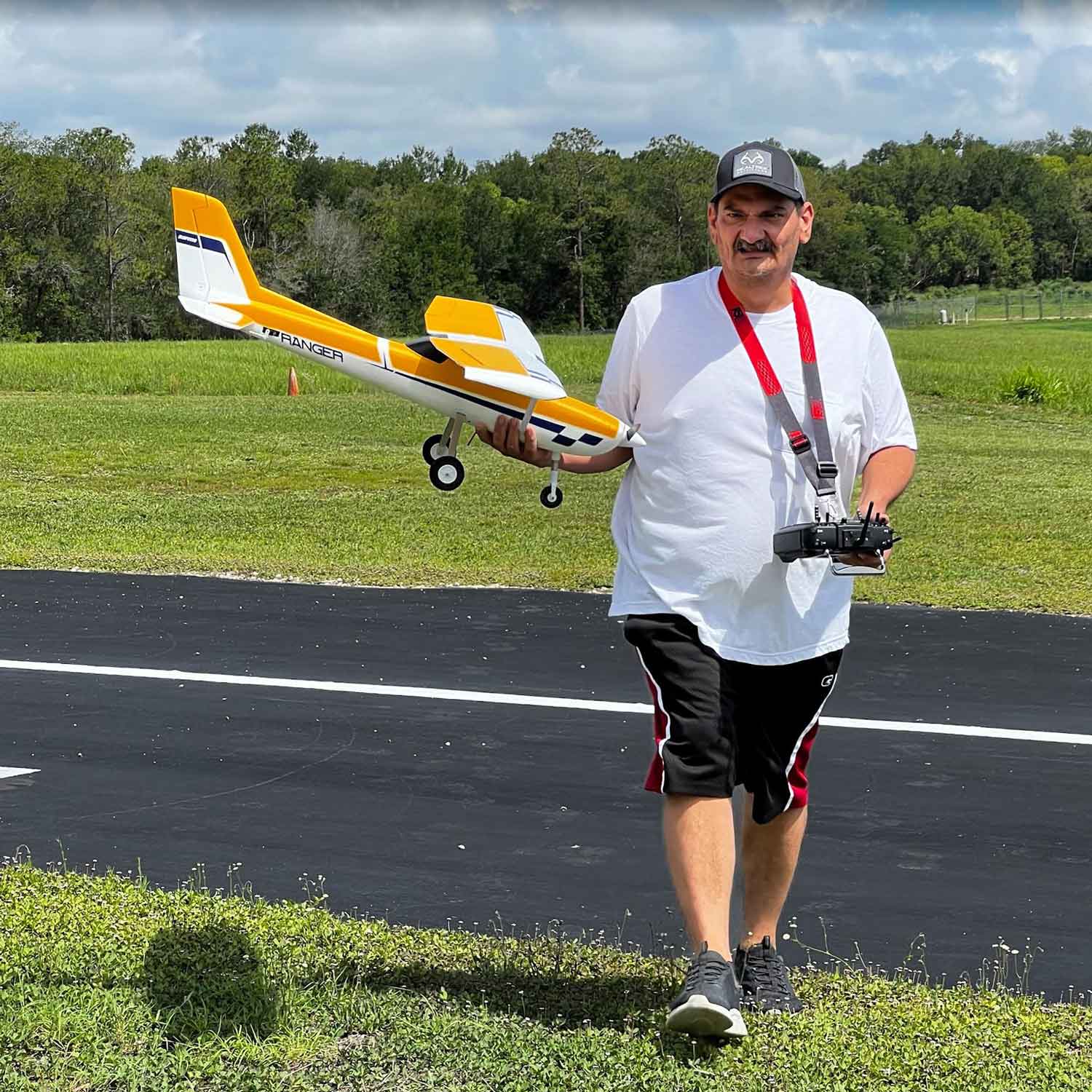
When browsing RC airplanes for sale, beginners must prioritize stability over speed. High-wing configurations feature the main wing mounted directly on top of the fuselage. This design creates a pendulum effect, allowing the aircraft to naturally level itself when you release the control sticks. Low-wing fighter planes lack this self-righting aerodynamic property and require constant correction, making them unsuitable for first-time flyers.
Foam Construction and Ready-To-Fly Packages
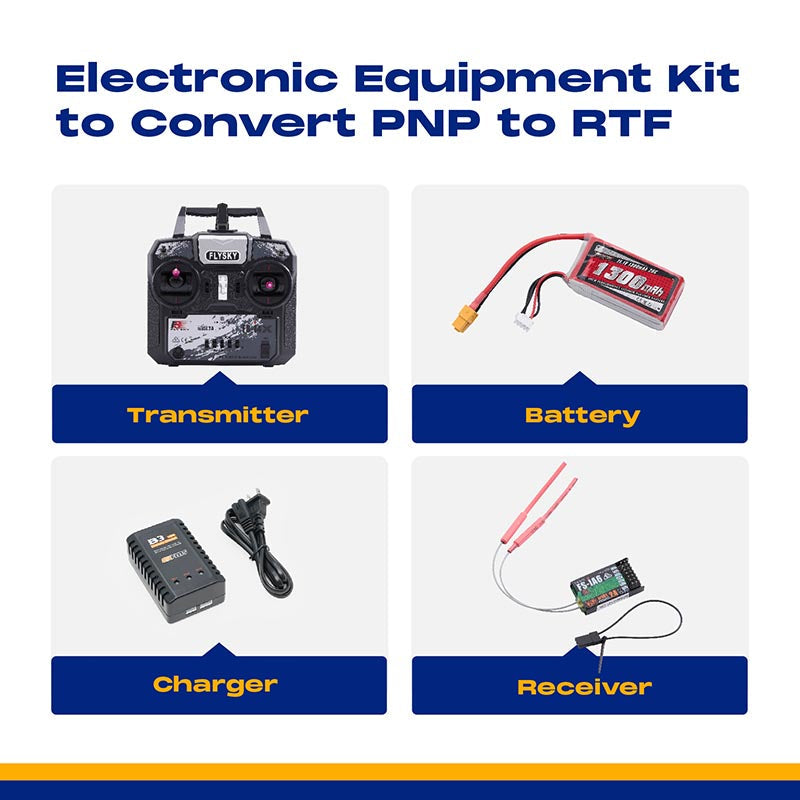
Your first aircraft will experience hard landings. Expanded Polyolefin (EPO) foam absorbs impacts efficiently and repairs quickly with standard cyanoacrylate glue. Beginners should look for RTF RC planes. RTF stands for "Ready-To-Fly," meaning the box includes the airplane, motor, battery, and a pre-bound radio transmitter. The FMS 1300mm PA-18 Super Cub with Reflex V3 features oversized pneumatic tires, CNC metal landing gear, and STOL capabilities, making it highly durable for new pilots.
Selecting the Best Beginner RC Plane Size
Small micro planes get pushed around heavily by light wind. Large models are difficult to transport. The best beginner RC plane usually features a wingspan between 1100mm and 1400mm. This size provides enough mass to handle moderate wind gusts at the club field while still fitting inside a standard car without requiring complex disassembly at the end of the day.
Why the Best Beginner RC Plane is Electric, Not Gas
Modern hobby RC planes rely almost entirely on brushless electric motors and Lithium Polymer (LiPo) batteries. Electric power is highly recommended for newcomers because it operates via a plug-and-play system. You simply charge the battery, plug it into the Electronic Speed Controller (ESC), and launch the aircraft. Electric motors provide instant, reliable thrust without stalling mid-air.
Nitro or gas-powered engines require extensive mechanical knowledge. Pilots must manually tune the carburetor, mix fuel, clean exhaust residue from the airframe, and manage engine temperatures. If a gas engine stalls during flight, the pilot must execute an emergency dead-stick landing. For an untrained pilot, a sudden engine stall almost always results in an immediate crash.
Many local clubs face strict noise ordinances due to encroaching residential neighborhoods. Gas engines exceed 90 decibels, causing noise complaints that can shut down a flying field entirely. Electric models operate quietly. When evaluating RC airplanes for sale, selecting an electric model ensures compliance with club noise regulations and allows you to focus entirely on flight mechanics rather than engine tuning. Because of this simplicity and reliability, the best beginner RC plane is always an electric model.
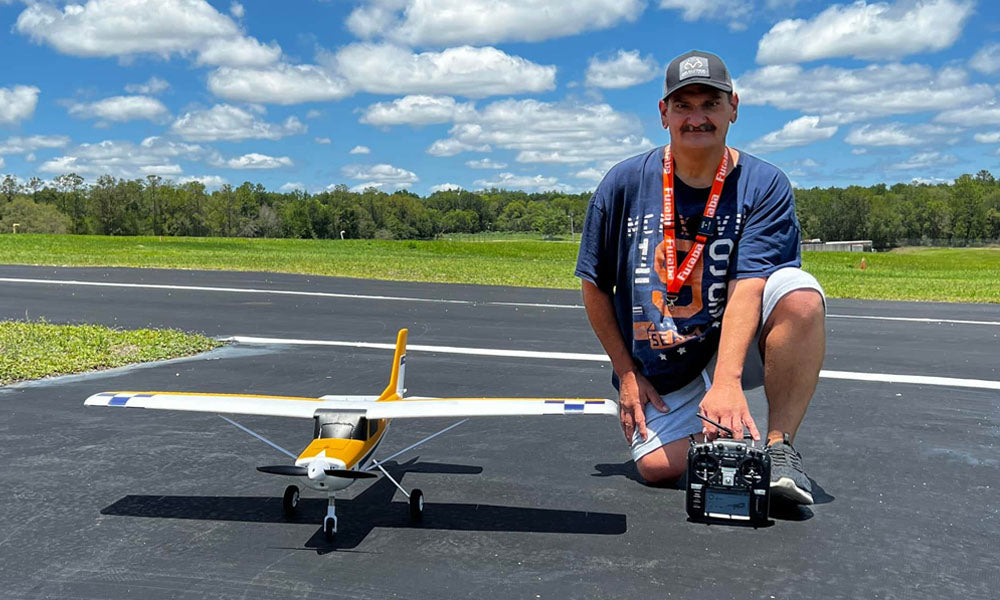
Getting a "Buddy Box" Lesson from Veteran Pilots
The absolute fastest way to learn is using a buddy box system. This training method connects two radio transmitters together via a physical cable or a wireless link. The instructor holds the master radio, and the student holds the secondary radio. The instructor pilots the aircraft to a safe altitude and then flips a specific switch to transfer control over to the student.
If the student makes a mistake and the plane enters a steep dive, the instructor simply releases the trainer switch. Control instantly returns to the master radio, allowing the veteran pilot to recover the aircraft safely. This system prevents the total destruction of your new equipment on the first day and removes the fear of crashing.
Using a buddy box allows instructors to teach specific maneuvers one at a time. The instructor handles the complex takeoff and landing procedures, while the student practices basic left and right turns in the air. Many clubs require new members to complete a specific buddy box training program before they are authorized to fly their RTF RC planes solo at the facility.
Start Flying RC Planes Safely Today
Joining an established flying club provides the necessary structure to safely learn aerial navigation. By understanding flight line safety, avoiding complex gas engines, and utilizing the buddy box training system, you eliminate the common frustrations associated with learning to fly. Selecting a durable, electric high-wing trainer ensures you maximize your time in the air. Follow club regulations closely to establish a secure, long-term foundation for flying hobby RC planes.
FAQs About RC Plane Club Flying
How do I find clubs for RC planes near me?
You can locate official flying facilities by visiting the Academy of Model Aeronautics (AMA) website and using their club finder tool. Enter your zip code to generate a list of sanctioned fields, complete with contact information and driving directions to the runway.
Do I need insurance to fly at a club?
Yes. Most official clubs require an active AMA membership. This membership provides specific liability insurance coverage in case your aircraft causes property damage or bodily injury while operating at the sanctioned field.
Are RTF RC planes ready out of the box?
Yes. RTF models include the transmitter, battery, and charger. However, you still need to bolt the wings to the fuselage and charge the battery fully before your first flight. You must also verify the center of gravity before taking off.
What is the most durable plane for club training?
Consider the FMS 1300mm PA-18 Super Cub with Reflex V3. Its CNC metal landing gear and screw-together assembly offer excellent durability and easy transportation for new pilots.
Can I fly a drone at an airplane club?
This depends entirely on the specific club rules. Some facilities maintain separate flight lines or specific times for multirotor drones, while others are restricted strictly to fixed-wing aircraft. Always ask the club officers before bringing a drone to the runway.