

Poseer un avión RC no se trata solo de la emoción de volar; también se trata de la disciplina del mantenimiento. Un almacenamiento adecuado es el arma secreta para la longevidad. Al seguir protocolos específicos, aseguras que las baterías de tu avión RC ofrezcan potencia máxima durante años mientras previenes incendios peligrosos. Esta guía cubre los pasos esenciales para un almacenamiento seguro y efectivo de baterías LiPo, convirtiendo un posible peligro en una fuente de energía confiable.
Por qué tus baterías LiPo necesitan un cuidado adecuado
Muchos pilotos arruinan involuntariamente sus baterías de avión RC no por chocar, sino por descuidarlas en la estantería. El cuidado de las baterías RC se trata de más que solo cargar; se trata de preservación. El descuido conduce a la hinchazón, pérdida de potencia y riesgos significativos de incendio. Tratar tus baterías con el mismo cuidado que tu fuselaje asegura que funcionen de manera confiable cada vez que vayas al campo, ahorrándote dinero y manteniendo tu hogar seguro.
La ciencia detrás de la degradación de las baterías LiPo
Las baterías de polímero de litio (LiPo) son químicamente volátiles. A diferencia de las baterías alcalinas en tu control remoto, LiPos están siempre activas internamente. Cuando se dejan completamente cargadas (4.2V por celda), los químicos internos están bajo alta tensión. Esto provoca que el electrolito se descomponga, creando gas dentro del paquete sellado.
Esta generación de gas conduce a "hinchazón", donde la batería se expande físicamente. Una vez que una batería se hincha, el daño interno es irreversible, aumentando la resistencia interna y arruinando el rendimiento. Por el contrario, dejarlas vacías provoca que el voltaje caiga por debajo de niveles críticos, dejando el paquete muerto. El cuidado adecuado de la batería RC se trata de encontrar el punto medio químico donde la batería es estable y está inactiva.
Encuentra el voltaje de almacenamiento perfecto para tus LiPos
El "punto dulce" para una batería LiPo es un estado de equilibrio donde la química es más estable. Entonces, ¿cuál es el mejor voltaje para el almacenamiento de LiPo? El estándar de la industria es entre 3.80 y 3.85 voltios por celda.
A este voltaje (aproximadamente 40-50% de capacidad), la batería tiene suficiente energía para evitar que la autodescarga mate las celdas, pero no suficiente energía para causar estrés químico. Este equilibrio mantiene la resistencia interna baja, asegurando que la batería rinda bien la próxima vez que vueles. Almacenarlas a este voltaje específico es la forma más efectiva de prevenir la degradación con el tiempo.
Cómo usar tu cargador en modo de almacenamiento
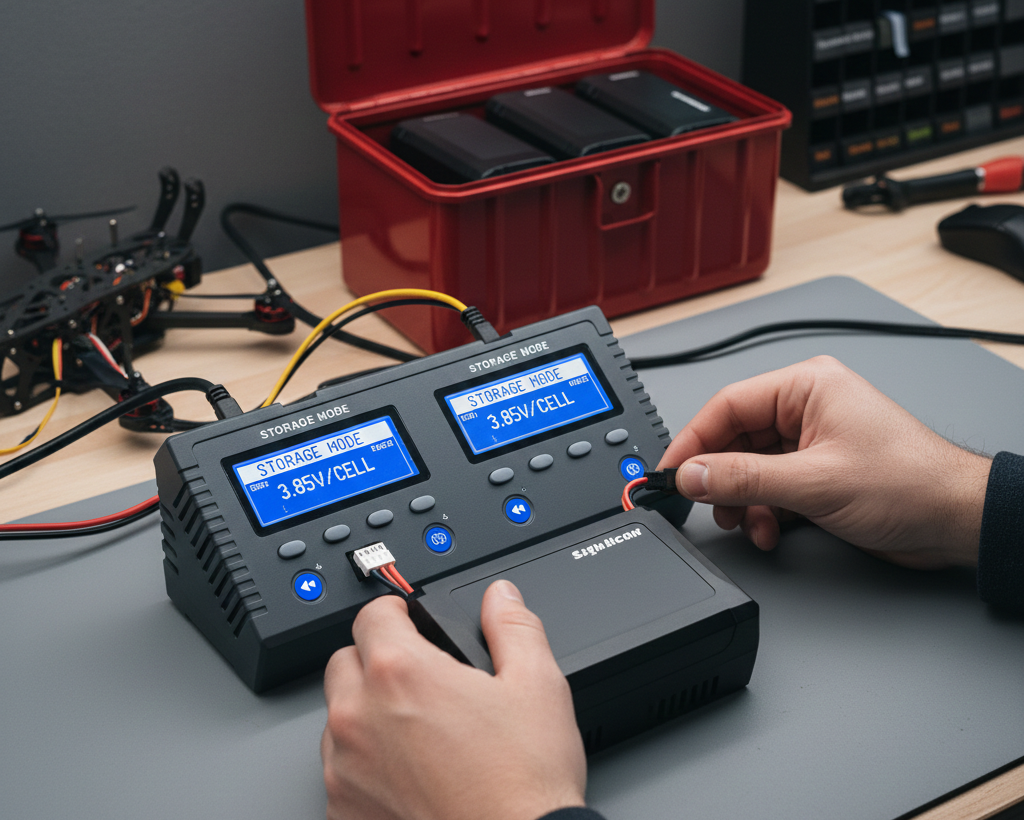
No necesitas sentarte con un voltímetro y adivinar cuándo detener la carga o descarga. Casi todos los cargadores RC modernos computarizados cuentan con un programa dedicado de "Almacenamiento". Esta es la forma más precisa de gestionar tus paquetes.
Simplemente conecta el cable principal de tu batería y el cable de balance, selecciona "Modo de Almacenamiento" y presiona iniciar. El cargador leerá el estado actual de la batería. Si está llena, el cargador la descargará automáticamente hasta 3.85V. Si está vacía, la cargará hasta ese nivel. Esta automatización hace que el almacenamiento de baterías LiPo sea sin esfuerzo y preciso, eliminando el error humano de la ecuación.
Los mejores lugares para mantener tus baterías seguras
El entorno físico juega un papel enorme en la salud de la batería. El calor es el enemigo de la química de iones de litio. La temperatura segura para almacenar baterías LiPo es la temperatura ambiente, idealmente entre 40°F y 70°F (5°C - 21°C).
Nunca almacenes baterías en un coche caliente o en un cobertizo que se hornea al sol de verano. El calor alto acelera la degradación química e incluso puede llevar a un descontrol térmico. De manera similar, evita el frío, que puede dañar los electrolitos y reducir la capacidad. Un sótano o taller seco y controlado climáticamente, alejado de la luz solar directa es el lugar ideal para preservar tu inversión.
Por qué necesitas una bolsa o contenedor seguro para LiPo
El equipo de seguridad es innegociable. Incluso una batería en voltaje de almacenamiento lleva energía. Si ocurre un cortocircuito, puede comenzar un incendio. Nunca debes almacenar LiPos sueltas en un cajón o en un banco de trabajo de madera.
Invierte en una bolsa segura para LiPo resistente al fuego. Estas están hechas de material de fibra de vidrio diseñado para sofocar un incendio. Para una mejor protección, muchos aficionados utilizan latas de munición metálicas sobrantes. Si usas una lata de munición, quita el sello de goma para evitar la acumulación de presión en caso de incendio, y forra el fondo con arena. Estos contenedores aseguran que si una batería falla, el fuego no se propague a tu hogar. Este es el pilar de la seguridad de las baterías LiPo.
Consejos para el almacenamiento a largo plazo de baterías
La forma en que gestionas tus baterías depende de cuánto tiempo estará inactiva la batería. Esperar hasta el próximo fin de semana en comparación con esperar hasta la primavera es diferente.
Protocolos a corto y largo plazo
Si se planea un vuelo dentro de las próximas 24 a 48 horas, una carga completa de la batería se considera adecuada. Más allá de tres días, es necesario almacenar la batería en modo de almacenamiento. El proceso de descomposición química ocurre antes de lo que la mayoría de la gente piensa, siendo la consistencia un papel vital.
Mantenimiento fuera de temporada
Para mantener las LiPos durante los fríos meses de invierno o durante períodos prolongados de inactividad, no simplemente las configures y olvídate de ellas. Las LiPos son propensas a la autodescarga con el paso natural del tiempo. Así que, una vez al mes, tal vez dos, usa un probador de celdas en tus celdas LiPo para verificar que el voltaje no haya caído por debajo de 3.6V. Si eso ocurre, ejecuta el ciclo de almacenamiento una vez más para cargar las celdas de nuevo a un rango saludable de 3.8V.
Los peligros de almacenar LiPos completamente cargadas
Dejar una batería de avión RC completamente cargada es el camino más corto para destruirla. Es similar a tener una banda elástica estirada a su máxima capacidad, que, con el tiempo, pierde su "rebote". El resultado de mantener una batería cargada durante una semana al 100 por ciento de capacidad es que aumenta su resistencia interna.
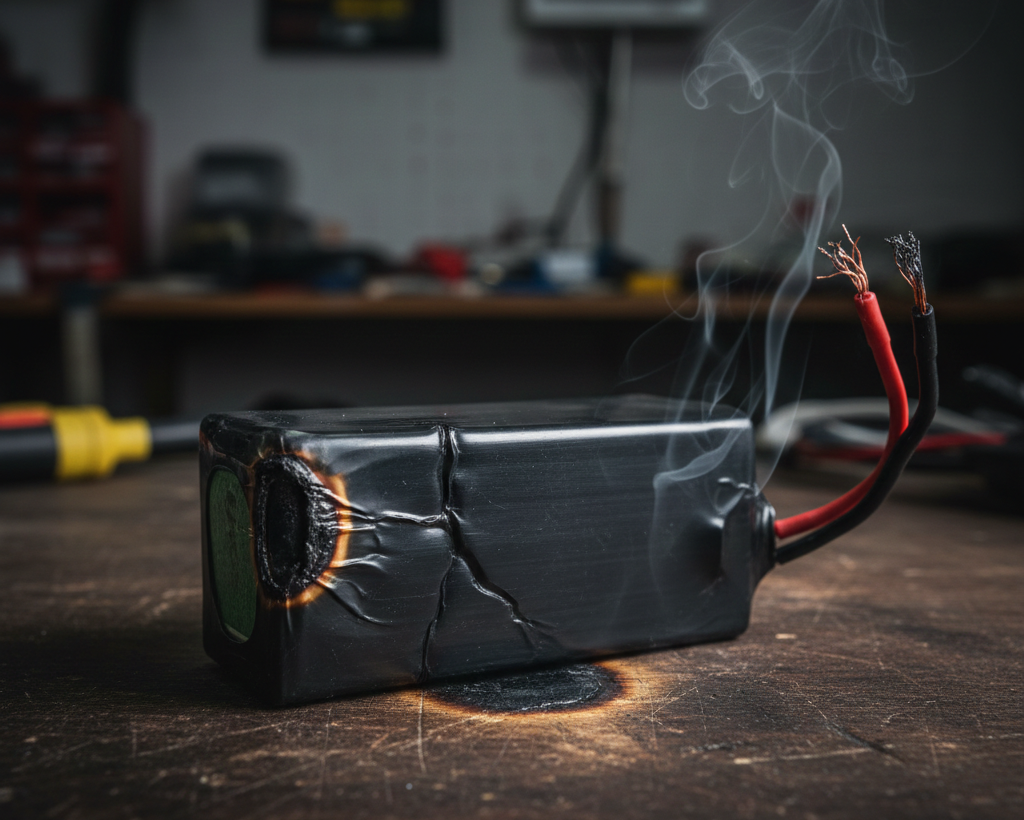
Una alta resistencia interna significa que una batería es incapaz de entregar energía rápidamente. En el aire, esto significa una fuerza de empuje reducida y un tiempo de vuelo reducido. Además, la hinchazón, o acumulación de gas, es un riesgo de seguridad. Es impredecible cuándo una batería hinchada podría estallar en llamas debido a un accidente de carga. Nunca sacrifiques la seguridad por tener una fuente de energía cargada a mano.
Tu lista de verificación final para un almacenamiento seguro de LiPo
Para asegurarte de que estás siguiendo las mejores prácticas, revisa esta lista de verificación cada vez que completes un ejercicio de vuelo:
- Voltios: En todos los casos, asegúrate de que tus celdas usadas estén configuradas de nuevo a 3.80V - 3.85V por
- Contención: Almacena todas las baterías en una bolsa segura para LiPo o en una caja de munición metálica ventilada.
- Entorno: Almacena el contenedor en un ambiente fresco y seco, preferiblemente lejos de materiales inflamables como gasolina, papel, etc.
- Inspección: Inspecciona en busca de hinchazón o cables dañados antes de almacenar.
Preguntas frecuentes
¿Puedo almacenar mis baterías LiPo en el refrigerador para que duren más?
No. Aunque las temperaturas frías resultan en reacciones químicas ralentizadas, se introduce la posibilidad de condensación. Esto se debe a que, cuando la humedad se acumula dentro del paquete una vez que se retira, puede ocurrir un cortocircuito. Por lo tanto, es mejor mantenerlas en una habitación fresca, que esté aproximadamente a 60-70°F, en lugar de en un refrigerador.
¿Qué debo hacer si mi batería se ha hinchado?
La batería hinchada está dañada. No es segura; por lo tanto, nunca consideres cargar, descargar o reparar la batería. La batería debe descargarse a 0V mediante agua salada o un descargador dedicado, y desecharse en un centro de reciclaje de baterías.
¿Está bien dejar las baterías LiPo conectadas al avión?
No. Incluso cuando el avión está apagado, el ESC (Controlador Electrónico de Velocidad) sigue consumiendo. Esto significa que en cuestión de semanas, la batería se agota más allá del voltaje mínimo que es seguro para su uso, matando la batería.
¿Puedo viajar en avión con mis baterías LiPo?
Sí, pero solo en tu equipaje de mano. Esto se debe a que la FAA tiene una prohibición sobre baterías de litio sueltas en tu equipaje. Debes proteger tus baterías (cubrir los terminales con cinta) en una bolsa segura para LiPo hermética. Siempre verifica las regulaciones actuales de las aerolíneas antes de volar.