
You have finished putting together your RC airplane, you know that your battery is charged, and you can't wait to take it out to the flying field. However, there is one thing that you absolutely have to do before you make your first trip to the flying field, regardless of whether you are an accomplished pilot or whether you are a complete beginner. This one thing is to balance your aircraft. This is something that is quicker and easier to accomplish than you may think, but it is imperative to a successful first flight.
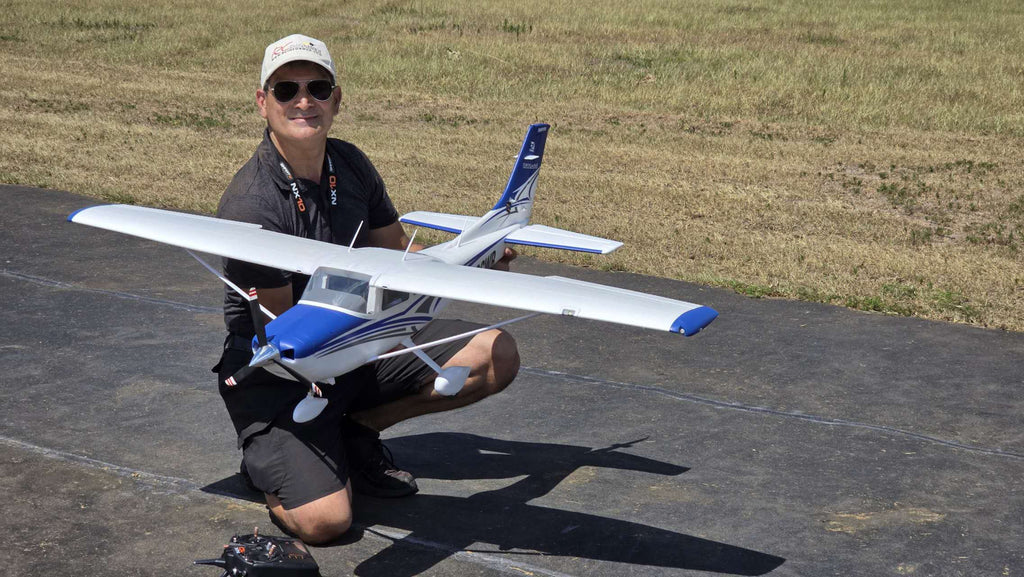
Why Proper Balance Is a Must for Your First Flight
The role of balancing an RC aircraft is one that is misrepresented in its importance. An unbalanced aircraft is, at best, hard to fly and, at worst, completely uncontrollable and dangerous. This is because an aircraft’s stability is directly affected by its Center of Gravity. A well-balanced aircraft will fly smoothly, while one that is not will make life difficult for you during its maiden flight, to say the least.
Understand the Center of Gravity (CG)
Before you can balance your plane, you must understand the term "Center of Gravity," often abbreviated as CG. The CG is the precise point on the aircraft where its weight is perfectly centered. Think of it as the fulcrum on a see-saw. If you could place your finger on this single point, the entire remote control airplane would balance perfectly. Every design decision an aircraft engineer makes, from the wing shape to the tail size, is based on this specific balance point.
Where to Find the Correct CG for Your Plane
So, how do you find this magical point? Thankfully, you don't have to guess. The manufacturer of your RC airplane has already done the complex calculations for you.
You will almost always find the correct CG location in the aircraft's instruction manual. It is typically shown as a symbol (often a circle with black and white quarters) on a diagram of the wing. The manual will specify the CG as a distance measured back from the leading edge of the wing. If you've lost the manual, a quick search on online RC forums for your specific model will usually provide the answer from fellow pilots.
A Simple Guide to Checking Your Plane's Balance
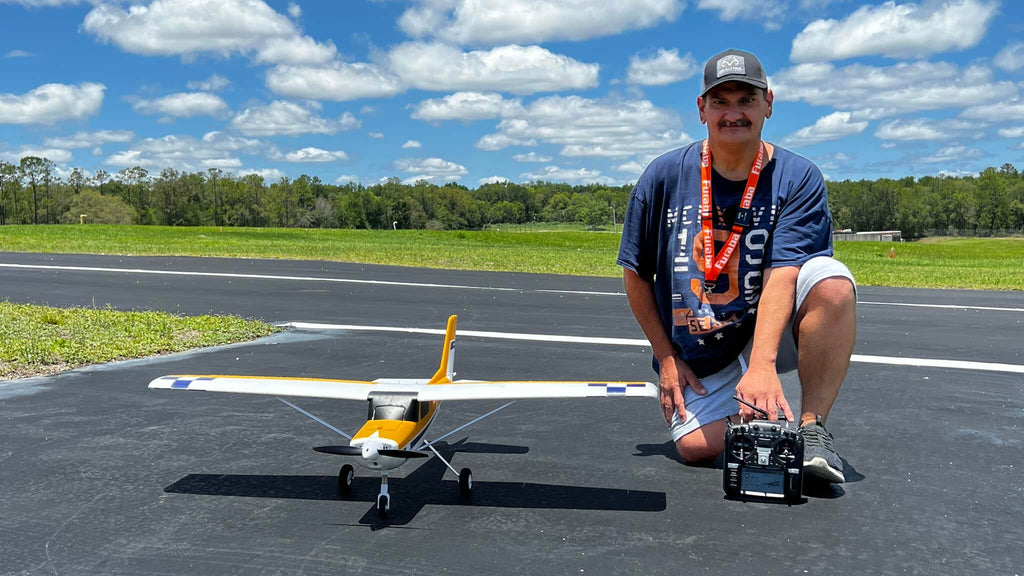
This is the hands-on part. For any pilot starting with RC planes for beginners, this procedure should become a pre-flight ritual.
- Fully Assemble the Aircraft: Your plane must be 100% ready to fly. This means the wings are attached, the propeller is on, and, most importantly, the flight battery is installed exactly where you intend to fly with it.
- Mark the CG Location: Use a marker to make a small dot on the underside of each wing at the distance specified in the manual.
- Lift and Observe: You can now lift the aircraft by placing your fingertips on these two marks. Alternatively, you can use a specialized balancing tool. Lift the plane and observe how it rests.
Is Your Plane Nose Heavy or Tail Heavy?
Once the plane is lifted by its CG point, its attitude will tell you everything you need to know. There are three possible outcomes:
- The nose drops: This means your plane is nose-heavy.
- The tail drops: This means your plane is tail-heavy.
- The plane stays level: This means you have achieved a perfect balance.
For beginner RC flying, a slightly nose-heavy condition is actually desirable. It makes the plane more stable and more resistant to stalling. A tail-heavy plane, on the other hand, is extremely unstable, overly sensitive to control inputs, and very dangerous to fly. Never attempt to fly a tail-heavy plane.
How to Adjust Your Aircraft's Balance Point
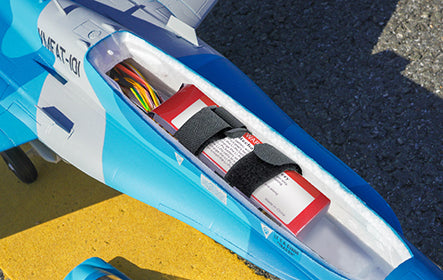
If your plane is not balanced, the fix is usually simple. The easiest and most common method for correcting the CG is by moving the flight battery.
Most RC planes for beginners have a large battery compartment with hook-and-loop straps, allowing you to shift the battery's position. If your plane is nose-heavy, slide the battery backward a small amount at a time. If it's tail-heavy, slide the battery forward. After each adjustment, re-check the balance until it is level or slightly nose-down. If moving the battery is not enough, you can add small amounts of dedicated weight (like lead or tungsten) to the nose or tail as a final adjustment.
Fine-Tuning Your CG with the In-Flight Dive Test
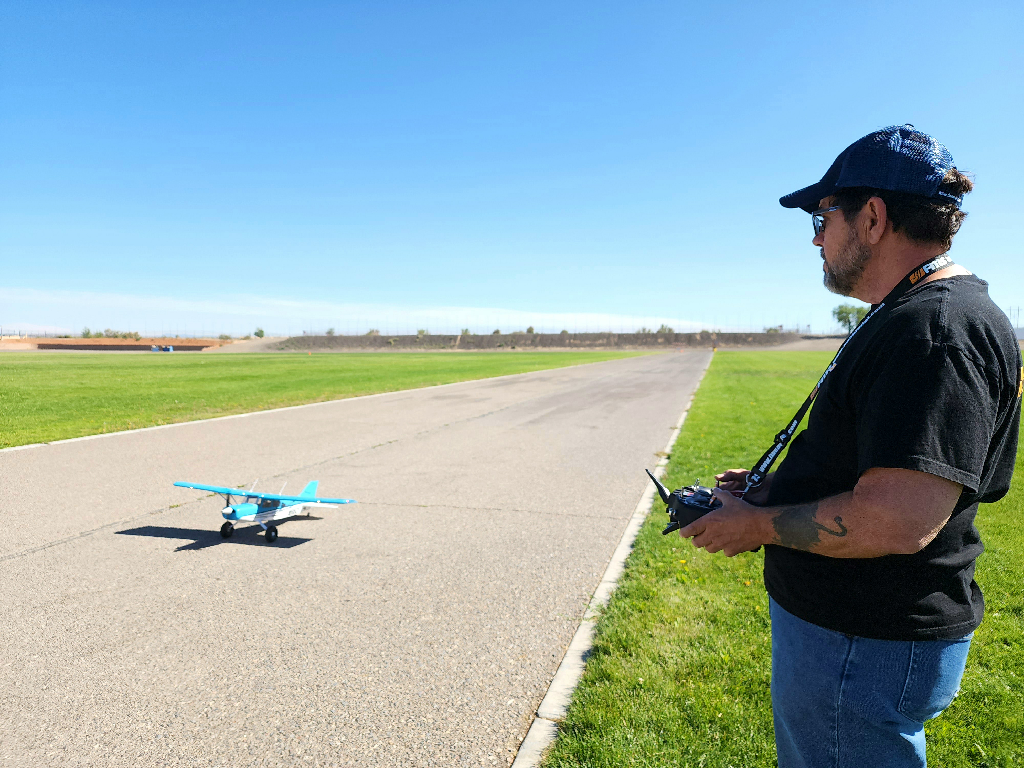
Once you are comfortable with beginner RC flying, you can perfect your plane's performance with an in-flight tuning method called the "dive test."
- Fly your plane to a safe altitude and reduce the throttle.
- Gently push the nose down into a 30-45 degree dive and release the controls.
- Observe what the plane does on its own. If it pulls up sharply, it is still nose-heavy. If the dive gets steeper, it is tail-heavy. If it continues in a straight line, the CG is perfect.
Don't Forget to Check Lateral Balance
While the nose-to-tail (longitudinal) balance is the most critical for stability, the wingtip-to-wingtip (lateral) balance is also important for smooth flight. An imbalance here will cause the plane to constantly try to roll to its heavy side, requiring you to hold in a corrective aileron input.
To check this, simply try to balance the plane by holding it from the center of the propeller and the center of the tail. If one wing consistently drops, it is heavier. You can correct this by adding a very small amount of weight (like a piece of heavy-duty tape or a small coin) to the inside of the lighter wingtip.
Conclusion
The art of balancing an RC airplane is one of those baseline knowledge lessons that all pilots have to know. This is, without a doubt, the most crucial pre-flight inspection you will make. Not only will you gain comprehension about what your Center of Gravity is, but you will, by understanding how to inspect this value and correct any issues on the ground, put yourself in a position to succeed and appreciate your remote control airplane experience.
At FMS Hobby, we are dedicated to providing the resources and models that ensure every pilot has a rewarding journey in this hobby.
FAQs
Why is a slightly nose-heavy plane better for beginners?
An airplane that is nose-heavy has more "longitudinal stability." This is because this type of airplane is naturally very capable of recovering to level flight on its own whenever it is faced with a disturbance, such as a gust of air. This makes such an airplane very forgiving, which is very crucial for new pilots.
Can I just add weight anywhere to balance my plane?
No. Always attempt to rebalance this by rearranging your available components, particularly your battery pack. Add weight only as a last resort and make it as small as possible. This extra weight will make your plane go faster but less efficiently.
Does the CG change if I use a different size battery?
Yes, definitely. The effect on the Center of Gravity because of having a heavier or lighter battery is considerable. The balance has to be checked each time you change the size and weight of the battery, even if it is a change in brands.
What happens if I fly a very tail-heavy plane?
The more rear-weighted an aircraft is, the more unstable and sensitive the control is. A small amount of 'up' on the elevator can make this type of aircraft pitch up due to severe pitches, which can lead to an uncontrollable situation. This is one of the common causes of an initial flight crash.