

The world of radio-controlled vehicles is bigger and better than ever. Whether you are a seasoned hobbyist or just getting started, watching these scale models tackle demanding terrain is undeniably exciting. Two of the most popular off-road champions are monster trucks and rock crawlers. While both look rugged, they deliver fundamentally different driving experiences.
This guide breaks down those differences—from performance and mechanical design to maintenance requirements—helping you determine which scale rig fits your driving style best.
What Are RC Monster Trucks?
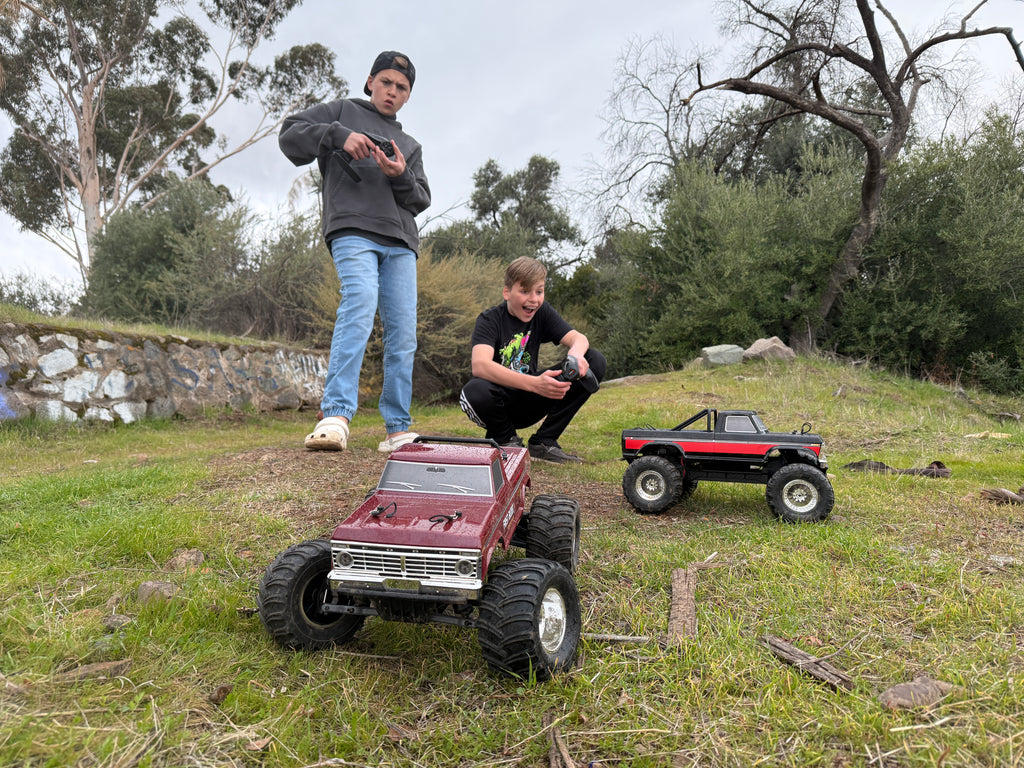
Think big, loud, and built to fly—that is the essence of RC monster trucks. These models are engineered to match the aggressive stance and stunts of full-size stadium monster trucks.
Design and Key Features
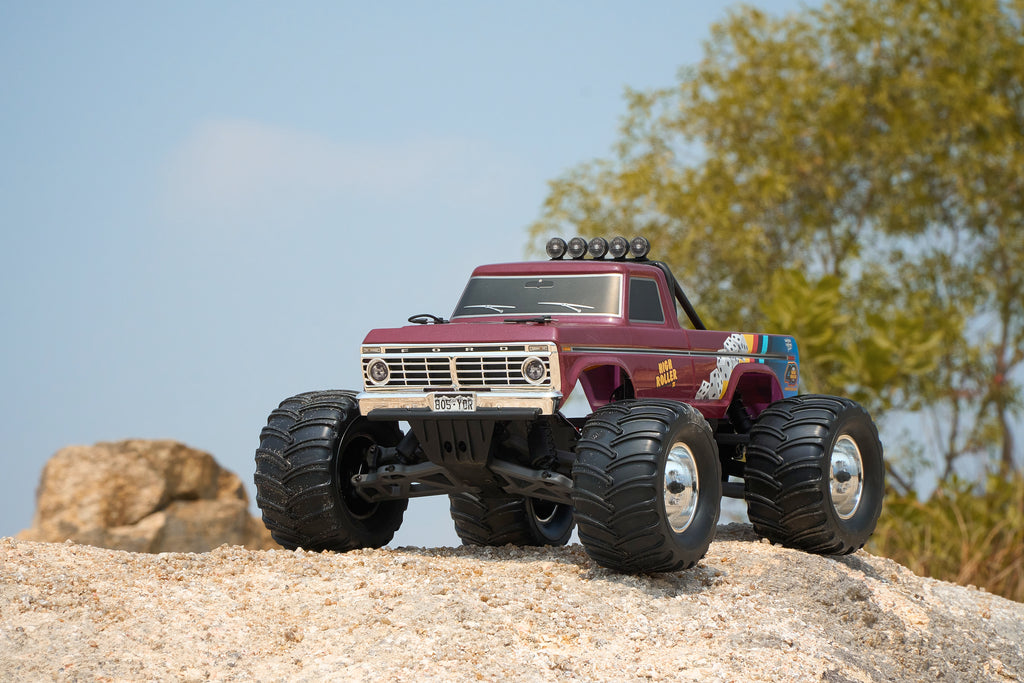
Monster trucks feature oversized deep-tread tires and high ground clearance to roll over obstacles with ease. They utilize a robust, long-travel suspension with oil-filled shocks designed to absorb heavy impacts from high jumps. The chassis is reinforced with durable skid plates to withstand rough bashing. Power is typically delivered by potent brushless electric motors or nitro engines geared for rapid acceleration and top-end speed.
Where They Shine
RC monster trucks excel at high-speed bashing—launching off ramps, clearing large gaps, and tackling wide-open spaces. This action-packed performance defines the appeal of RC monster trucks. They perform best in open areas such as public parks, dirt tracks, gravel pits, skate parks, and large backyards. With proper throttle timing, they can easily pull off wheelies, standing backflips, and massive airborne jumps.
Performance Profile
Speed, durability, and raw power are the core attributes of monster trucks. They deliver instant acceleration across uneven surfaces like grass, loose dirt, and pavement. While they handle diverse terrains, their handling prioritizes brute force, durability, and acrobatic stunts over low-speed precision.
What Are Rock Crawlers?
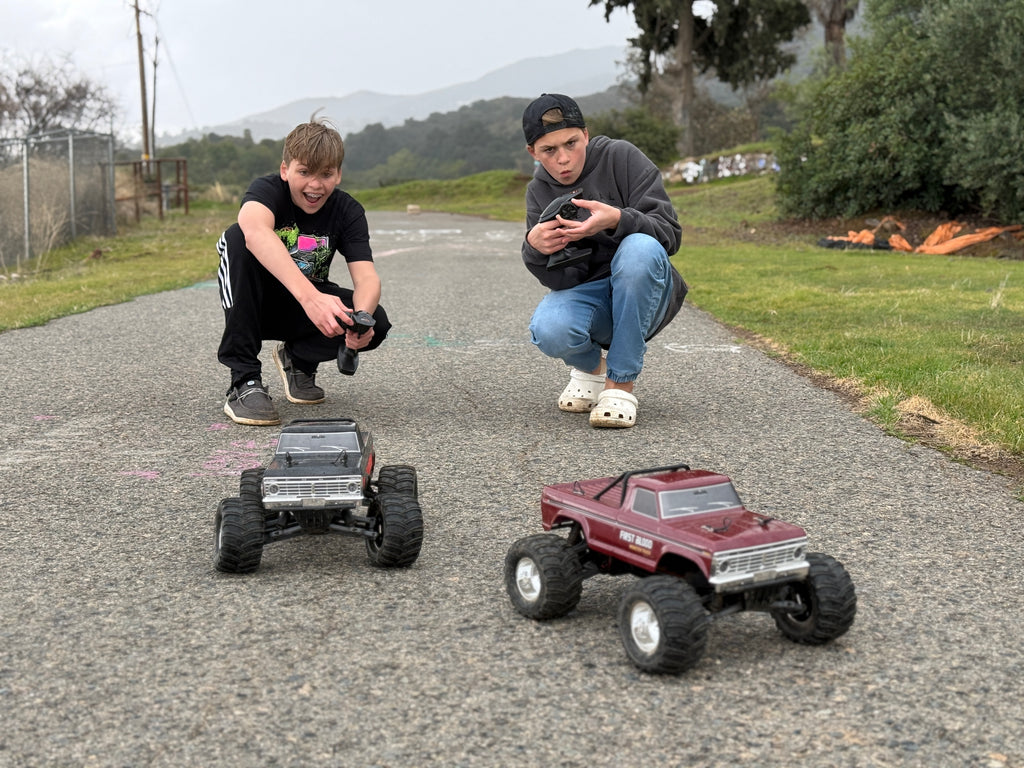
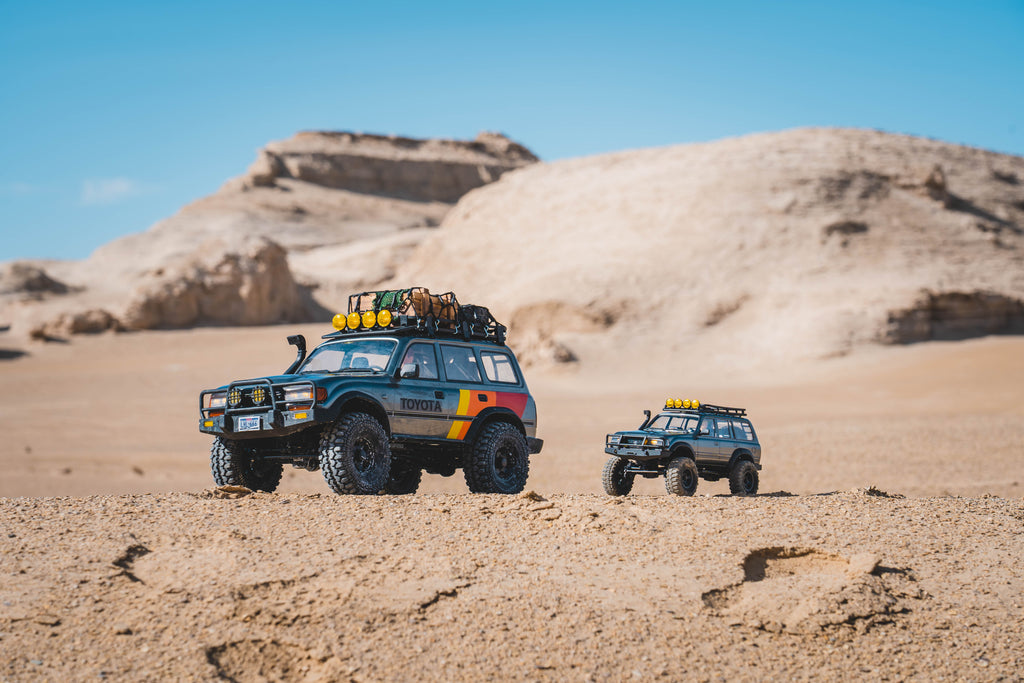
Rock crawlers represent a completely different driving philosophy, engineered for technical finesse, torque, and line selection rather than outright speed. They closely replicate full-scale off-road exploration rigs and competition trail vehicles.
Design and Key Features
Rock crawlers feature highly articulated solid-axle suspension setups that keep all four tires planted across irregular surfaces. They use ultra-soft, high-traction compound tires with specialized tread patterns to maximize grip on slick rock faces. Low-ratio gearboxes paired with high-torque motors provide smooth low-speed control. Many models incorporate locked differentials to distribute power evenly to every wheel. In addition, detailed scale bodies and realistic chassis geometry deliver authentic scale realism.
Where They Excel
Crawlers thrive in technical environments where other RC vehicles get stuck: rock gardens, steep inclines, exposed tree roots, forest trails, and custom scale crawler courses. Driving a crawler requires deliberate throttle management and precise steering inputs to pick optimal lines over challenging obstacles.
Performance Profile
Precision, torque, and traction define crawler performance. With specialized low gearing, crawlers can creep slowly over obstacles with millimeter accuracy. Their suspension flex and weight distribution ensure reliable grip on steep climbs, making technical obstacle navigation deeply satisfying.
Pros and Cons of RC Monster Trucks
Monster Truck Advantages
Thrills of Speed and Power
Launching a monster truck off jumps at high speed provides an immediate adrenaline rush. Powerful brushless motor systems offer instant torque and fast acceleration, making them exciting for drivers who love high-energy action.
Versatile Multi-Terrain Capability
Monster trucks easily navigate grass, dirt, gravel, sand, and asphalt. Their large tire diameter and substantial ground clearance allow them to power through uneven terrain without getting high-centered.
Monster Truck Disadvantages
A high center of gravity makes monster trucks prone to rolling over during sharp, high-speed turns. They also lack the low-speed throttle modulation needed for technical crawling.
High-speed crashes and hard jump landings inevitably increase the frequency of chassis maintenance and replacement of parts such as A-arms, shock towers, and drive cups.
Pros and Cons of Rock Crawlers
Rock Crawler Advantages
Exceptional Precision and Control
Rock crawling provides a methodical, skill-focused driving experience. Navigating complex obstacles requires planning your line and modulating the throttle carefully, resulting in a rewarding technical challenge.
Durable and Low-Impact Operation
Because crawlers operate at controlled speeds, drivetrain stress is focused on steady torque rather than violent crash impacts. Consequently, structural breakage is far less frequent compared to high-speed bashers.
Rock Crawler Disadvantages
Crawlers are geared strictly for torque, meaning they will feel underpowered if you are looking for top-end speed or airborne jumps. Driving a crawler across flat grass or open pavement can quickly feel unengaging.
Crawlers require dedicated terrain—such as rocks, roots, or trail inclines—to truly showcase their mechanical capabilities.
Choose the Right RC Car for You
Consider the following factors when deciding between a monster truck and a rock crawler:
Driving Style and Preferred Terrain
If you want high-speed runs, big air off ramps, and dynamic stunts, choose a monster truck. If you prefer technical trail exploration, scale realism, and methodical obstacle climbing, a rock crawler is the better match.
Skill Level and Maintenance Patience
Electric monster trucks are straightforward to drive out of the box, but high-speed control and mid-air corrections require practice, along with regular repair work. Rock crawlers require driving patience from the start, but their slower pace results in significantly fewer broken parts, making them very beginner-friendly for long-term ownership.
Budget and Upgrades
While entry prices are comparable across ready-to-run (RTR) models, monster trucks generally require a higher budget for replacement parts and durable suspension components. Crawlers often lead to scale accessory upgrades, weighted brass parts, and performance tire sets. Remember to factor in quality LiPo batteries and dedicated chargers for either platform.
Local Community and Venues
Explore your local hobby shops, RC clubs, and online groups (such as Facebook communities and active RC forums). Connecting with a like-minded RC community provides valuable tuning advice, group trail runs, and local track events.
Choose Your RC Thrill: Finding Your Perfect Match
Choosing between an RC monster truck and a rock crawler comes down to how you want to drive. Monster trucks deliver raw speed, big jumps, and energetic bashing fun. Rock crawlers deliver scale realism, precision control, and technical crawling capability. Both platforms offer exceptional RC enjoyment—select the one that matches your terrain and driving passion.