

When building electric RC planes, the motor and battery often get all the attention. However, a silent hero is working behind the scenes to keep your plane in the air: the power regulation system. The high-voltage battery that spins your propeller would instantly fry your delicate receiver and servos if connected directly. To bridge this gap, pilots must choose between a standard BEC and a UBEC. Understanding the difference between these two components is not just technical trivia; it is the key to preventing mid-air electronic failure.
Why Your Electronics Need Regulated Power
To understand the role of a BEC, you first need to understand the electrical mismatch inside your fuselage. The main flight battery in modern radio control airplanes is typically a LiPo pack ranging from 7.4 volts (2S) to 22.2 volts (6S) or more. This raw power is perfect for rc airplane motors.
However, your control system—specifically the receiver and the servos that move the control surfaces—operates on a much lower voltage standard, typically 5 to 6 volts. If you were to plug a 14.8V battery directly into a 6V receiver, the magic smoke would escape, and your electronics would be destroyed instantly.
This creates a problem: how do you power the low-voltage brain of the plane using the high-voltage muscle of the main battery? In the early days, pilots carried a separate, small battery pack just for the receiver. Today, we use voltage regulators to "step down" the main battery's power to a safe level. This is where the BEC comes into play.
What Is a BEC and How Does It Work?
BEC stands for Battery Eliminator Circuit. As the name suggests, its original purpose was to eliminate the need for that heavy, separate receiver battery. By tapping into the main flight pack, it saves weight and simplifies the setup.
Most commonly, you will find a BEC built directly into your Electronic Speed Controller (ESC). When you plug your ESC into the receiver's throttle channel, it does two things: it receives throttle signals from the pilot, and it sends regulated 5V power back to the receiver to run the radio system.
The Limits of the Standard Linear BEC
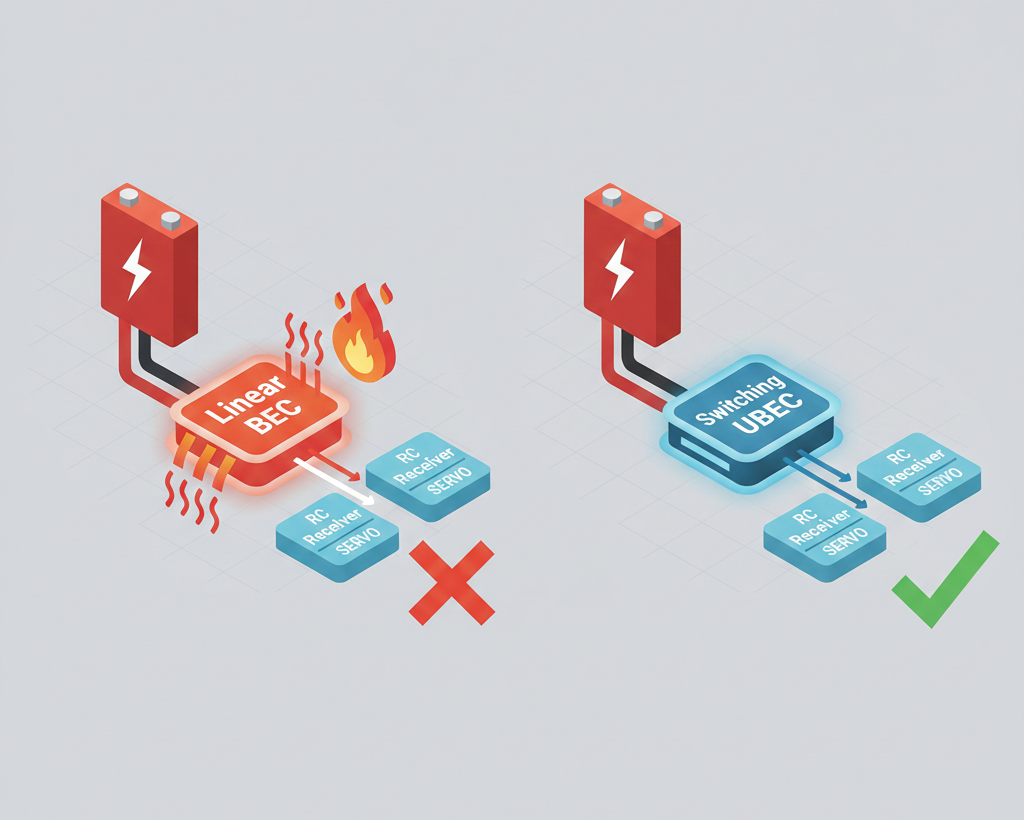
The standard internal BEC found in most basic ESCs is a "linear" voltage regulator. Think of it like a resistor that acts as a dam. It holds back the high voltage from the battery and only lets 5V through.
The problem is what it does with the excess energy. A linear BEC converts the voltage drop into heat. If you are running a 3S (11.1V) battery and need 5V, the BEC has to burn off 6.1V as pure heat. On small planes with only a few servos, this is fine. But if you increase the voltage or add more servos, the BEC can overheat, shut down, and cause a total loss of control.
Upgrade to a UBEC for Higher Efficiency
When your power demands exceed what a standard linear BEC can handle, you need a UBEC, which stands for Universal Battery Eliminator Circuit (sometimes called Ultimate BEC). A UBEC is almost always a standalone device, separate from the ESC.
Switching Technology
Unlike the wasteful linear BEC, a UBEC uses "switching" technology. Instead of burning off excess voltage, it rapidly switches the power on and off thousands of times per second. By controlling the duration of these pulses, it creates an average voltage of 5V or 6V with incredible efficiency.
Because it doesn't rely on resistance, a switching UBEC generates very little heat. This makes it capable of handling much higher input voltages (like 6S or 12S batteries) and delivering higher current (Amps) to your servos without breaking a sweat. It is the heavy-duty solution for serious RC pilots.
Determine When You Absolutely Need a UBEC
How do you know if your specific plane needs the upgrade? Sticking with a built-in BEC is simpler, but a UBEC is often safer. Here are the scenarios where installing a UBEC is mandatory for reliability.
High Servo Count or Digital Servos
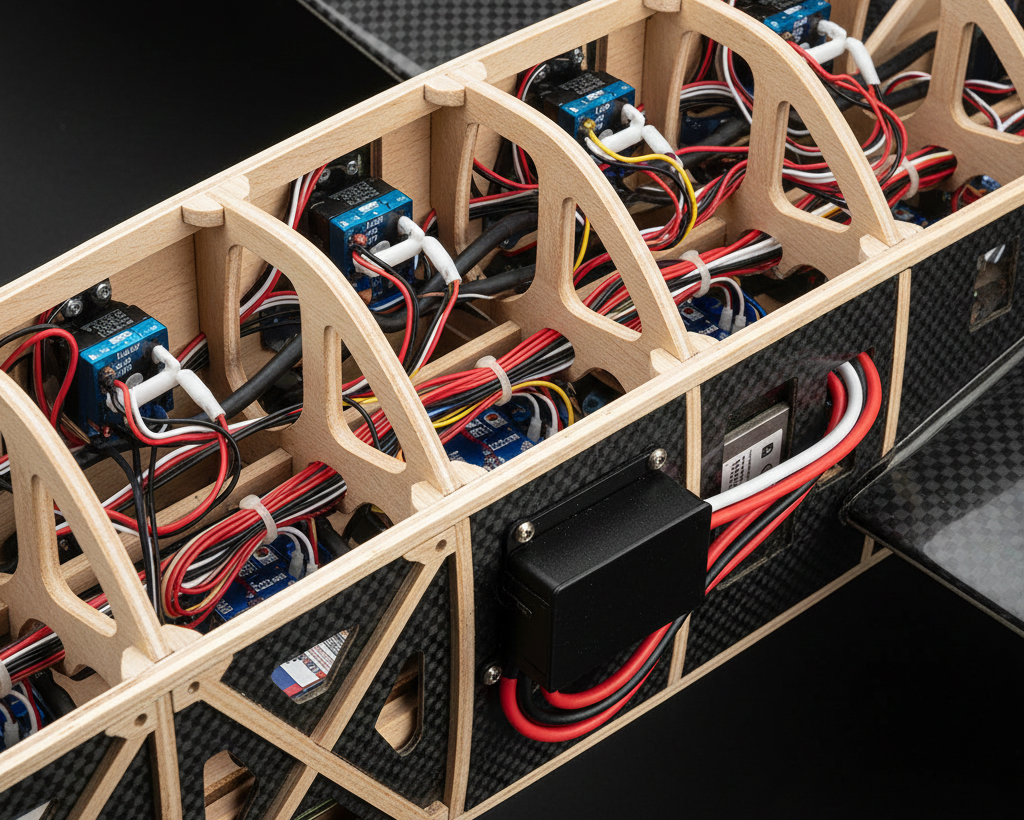
Standard analog servos draw very little current. However, if you are flying a model with flaps, retracts, and multiple control surfaces (using 5 or more servos), the current draw can spike significantly. Digital servos are notoriously power-hungry. A standard BEC might only supply 2 or 3 amps, which isn't enough for a complex plane during a high-stress maneuver. A UBEC can easily supply 5, 10, or even 20 amps.
High Voltage Batteries (4S and Above)
As mentioned earlier, linear BECs struggle with high voltage drops. If you are flying with a 4S LiPo battery or larger, a linear BEC has to work incredibly hard to step that voltage down to 5V. The risk of overheating skyrockets. For any setup using 4S or higher, a switching UBEC is the standard recommendation to ensure your control system doesn't brown out.
Using an "Opto" ESC
Some high-end ESCs are labeled "Opto." This means they are optically isolated to prevent motor interference from reaching the receiver. These ESCs do not have an internal BEC at all. If you buy an Opto ESC, you have no choice; you must use a separate UBEC or a receiver battery to power your electronics.
Wire Your UBEC Correctly
Installing a UBEC is slightly more involved than plugging in a standard ESC, but it is a straightforward process.
Disable the Internal BEC
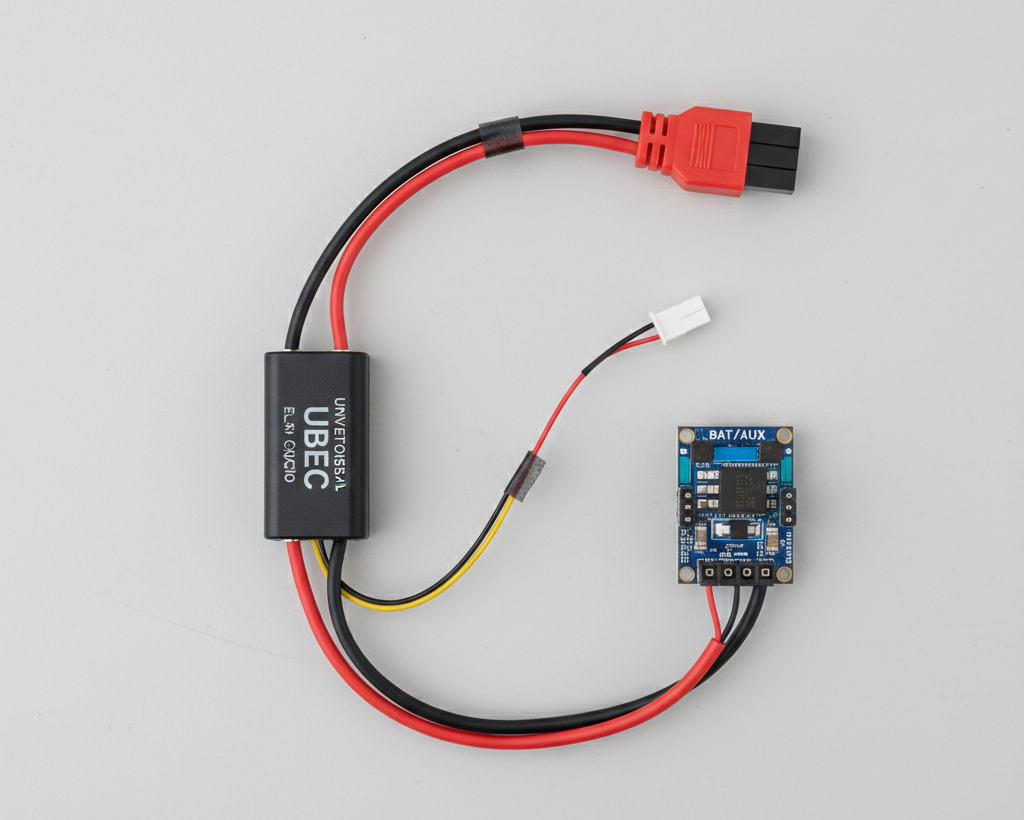
If your ESC has a built-in BEC, you cannot simply plug a UBEC in alongside it. The two voltage regulators will fight each other, potentially damaging your equipment. To fix this, you must disconnect the red (positive) wire from the ESC's receiver plug. You can cut it, or better yet, gently lift the plastic tab and pull the pin out, taping it back for safety. This disables the ESC's power output while keeping the signal wire intact for throttle control.
Connect the UBEC
The input wires of the UBEC need to be soldered directly to the connector of your ESC or the main battery plug. This ensures it draws power from the flight pack. The output plug of the UBEC then goes into any open slot on your receiver (often the "Bat" or "Aux" port). Once connected, your receiver will be powered by the efficient, cool-running UBEC, while the ESC focuses solely on the motor.
FAQ
What happens if I don't use a UBEC when I should?
When you overload a standard linear BEC, it will overheat. Most BECs possess a protective feature against overheating. This sounds very desirable, but in the air, what will happen is that the BEC will turn off your receiver to protect itself. You will not be able to control the plane anymore, and that’s the end of your flying experience. Once the BEC cools off, it might start working again, leaving you puzzled as to why your plane crashed.
Does a UBEC drain my flight battery faster?
Technically speaking, yes, as it is powering servos from the main pack. However, the receiver and servos draw a mere fraction compared to the main motor. The reduction in flying time is almost nothing. Actually, a switching UBEC is more efficient than a linear BEC, meaning it loses less power as heat, which may make your system more efficient.
Can a UBEC cause interference?
Switching regulators (UBECs) can also create electrical noise at a very high frequency as a consequence of their fast-switching operation. Once a concern with older 72 MHz FM radios, today such noise would only very rarely cause a problem with 2.4 GHz radios. It remains prudent to keep your UBEC, or receiver, and antennas at least a few inches apart, nonetheless, as a precaution.
What is the difference between a SBEC and a UBEC?
In marketing terms, they may be used interchangeably. SBEC is an acronym that stands for "Switching Battery Eliminator Circuit." Almost all external UBECs incorporate switching technology, so UBECs are, in essence, SBECs. "SBEC" visible on an ESC listing indicates that the regulator operates utilizing the superior switching process, which is something to really look for.
Do I need a UBEC for a gas plane?
Gas or nitro planes do not have a primary flying battery, such as electrics do. The airplanes will normally employ a dedicated receiver battery (NiMH or LiFe). If the desire is to power the receiver with a 2S LiPo to extend the duration of the flight, a UBEC can convert the 7.4V LiPo voltage to a safe 6V for standard servos.